Thursday, September 9, 2010

From the Ministry of Very Small Things

So, I got my watch and watch case wrench today and decided to put them to use.

The case wrench came in a nice fancy box.

The watch is pretty sleek.

Sleeker in fact than both of my binary watches. It looks like it's going to be pretty tight in there.

As it turns out, this watch is "water resistant" not "water proof", so I didn't even need the wrench to get the back off. I just pried it off with a screw driver.

Inside, I found that they hardly used any of the space inside the watch. There is just a tiny little cluster of gears in the middle.

Wanting to preserve as much as the turn dial-knob as possible (this will serve as my button), I carefully extracted the parts bit by bit. To unscrew the tiny little flat heads, I had to use a razor blade to get them loose followed by more unscrewing by one of my huge-by-comparison flathead screwdrivers.

Very small screw and gear.

Overall, it was a pretty good experience. I managed to save all of the knob which will serve as my button.

The only issue I see is that the part of the watch that kept the knob from falling out no longer exists, so I'm going to have to work out some method of keeping the knob in. Most likely, I will just trim down the shaft (so it doesn't needlessly take up so much space) and then glue something to it to make it too wide to pull out all the way.

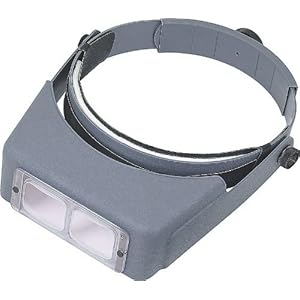
All in all, this was my first experience so far dealing with something very small, and I'm really glad I got my goggles (and the tweezers that are on the way; my current tweezers are terrible). I also got some good practice taking pictures of very small things.

Wednesday, September 8, 2010

In which I justify spending another $150

So, my current soldering situation is sad at best...

It goes to II!

Oh yeah, I forgot to mention that I found my iron on the Titanic.

Sure, I could replace the tip (if I could even find a compatible replacement, damn you Radio Shack), but all of the surface mount guides I've read recommend a "real" soldering iron with temperature control and the works.

I decided to pick up Weller WES51:
Ooooooh Aaaaah

It's about $100, but I can't really graduate as an electrical engineer without a proper iron. These are actually the same irons you'll find in labs all around campus, so I have experience working with them.

I also picked up some more gadgets:

  • Optiloupe 2.5x loupe for my Donegan goggles
  • VisorLight for my Donegan goggles (can you tell I really like these goggles?)
  • Wiha 120mm fine point tweezers
I got some solder flux too as per the recommendation of the below video, but I had to get it on Digikey because there was no Amazon Prime solder flux available and even the cheapest stuff cost like $9 shipping. Ridiculous. As far as solder wick and actual solder is concerned, I can pilfer those from lab.

I was thinking at first that I might be able to get by with the kind of equipment I already have, but then I realized that I'll be soldering something like 132 LEDs on to the final version of this biatch, and I want to be as comfortable as possible.

Even if you have no idea what I'm talking about, watch this video, it's amazing. Oh yeah, and by "expensive equipment", they mean several thousand dollars.

Back to school supplies

Today was my last first day of school, and when I was taking my bi-annual trip to Staples, I figured I'd pick up a binder to keep all of my data sheets and notes in order. I plan on actually documenting this project!

Goggles came!


I am so effing cool.

Monday, September 6, 2010

New features and replacement parts

I realized today that I2C is a universal(ish) standard kind of thing, and if possible, it would make it really easy if all of my components were I2C compatible.

For this reason, I'm probably going to replace my accelerometer with a a LIS-1331DLH, which is LGA16 like my current choice, but unfortunately, it's .5mm pitch as opposed to .65mm, so I can't use the same breakout board. I won't worry about it right now and order it at some point in the future.

I was also sitting at work today freezing my ass off and not believing the "74F" that the thermostat in the room was reporting when I got an idea: Why not add a thermometer to this thing? It wouldn't even be that hard. Just another chip.

I decided to get a LM75A. It's 8-SOIC, and sports an I2C interface.

I also got a 8-SOIC breakout board.

Sunday, September 5, 2010

A Transplant Candidate

So, I'm going to need a case for my watch to go into, so I ordered a cheap Casio watch off Amazon. Nobody seems to sell watch cases for hobbyists, so I guess I'm just going to have to go about ripping apart watches until I find one that will work.

This is the watch I bought:
http://www.amazon.com/gp/product/B000GAWSHM/ref=ox_ya_os_product

And I went ahead and bought a tool for getting the back off (I've done this before with a screw driver and managed to destroy my screwdriver, so...)

http://www.amazon.com/gp/product/B000HFRO8O/ref=ox_ya_os_product

Saturday, September 4, 2010

Back to the drawing board already?

So I realized this morning that I'm not going to have quite enough I/O pins to drive all of these LEDs. If I set it up like this:

Then to get 132 LEDs (60 mins, 60 seconds, and 12 hours), I'll need a 11x12 grid which will require 23 ports, much more than the ATmega48A has to offer.

Alternatively (and I'm not sure if this will work), seeing how LEDs only pass current in one direction, I could also arrange them like this:
This will double my LED capacity. With this setup, I would only need a 9x8 grid requiring just 17 I/O ports. The ATmega48A has this many ports, but a lot of them are tied up doing other things:

  • PC4 - SDA (part of the I^2C interface)
  • PC5 - SCL (part of the I^2C interface)
  • PD2 - INT0 (external interrupt)
  • PC0 - ADC0 (analog-digital converter required for reading the accelerometer)
  • PB6 - TOSC1 (needed for RTC crystal)
  • PB7 - TOSC2 (also needed for RTC crystal)
This leaves me only 16 ports. The last two might be optional though. If I get the external RTC unit working properly, then I will only need the I^2C interface to talk to it and I can free up TOSC1/2.

I shouldn't be needing any more inputs as my Interrupt pin can be reconfigured upon waking as a simple input port to accept user button-presses (remember, only has one button).

So all in all, this is a tight squeeze, but assuming I didn't forget anything, it should work.

My fall-back plan is to upgrade to the ATmega128A:

This mofo has a metric butload of pins and is still only .6 inches to a side. I don't really think this sets me behind though because this dude is surface-mount only and has similar features to the ATmega48A, so once I get my prototype code working, I can work on porting my code to the bigger chip.

Also, I purchased a set of these last night:

I'm stoked.